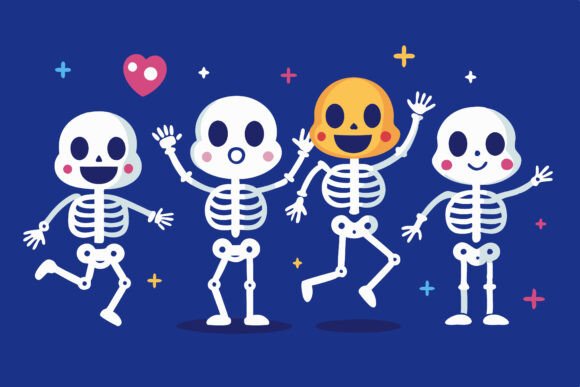
The Rise of Character-Driven Vector Art and Why Dancing Skeletons Illustrations Are Capturing Creative Attention
Visual communication has shifted dramatically over the past decade. Brands, educators, content creators, and app developers now rely on illustration sets that do more than fill space—they tell stories, evoke emotion, and make complex ideas instantly recognizable. Among the growing wave of themed vector collections, Dancing Skeletons has emerged as a surprisingly versatile and memorable concept that connects with audiences across multiple industries. Whether used in seasonal marketing, health education, entertainment branding, or playful UI design, this nimble cast of skeletal figures reflects a larger movement toward personality-packed visual assets built for real-world workflows.
What Dancing Skeletons Represents in Modern Illustration
At its core, a Dancing Skeletons illustration set is a curated collection of vector-based characters—skeletons caught mid-motion, posed with expressive energy, and designed to convey joy, movement, and character. Far from the morbid imagery traditionally associated with skeletal forms, these illustrations lean into whimsy, rhythm, and life. The contrast between the anatomical subject matter and the lively poses creates a visual tension that audiences find engaging, humorous, and deeply human.
These illustrations typically arrive as part of a broader AI EPS collection, meaning they are built in Adobe Illustrator's native vector format with organized layers, editable paths, and scalable outputs. For the working designer or marketer, this technical foundation matters just as much as the artistic style. A well-structured file saves hours of production time and opens the door to endless customization—changing colors, adjusting poses, isolating elements, or integrating the artwork into entirely new compositions.
Why Illustrations Like These Matter in a Saturated Visual Landscape
The global stock imagery market is flooded with generic options. Audiences have developed what can only be described as visual fatigue—the same smiling businesspeople, the same abstract geometric backgrounds, the same neutral icon sets. Against this backdrop, Dancing Skeletons offers something different: specificity, personality, and a touch of the unexpected. When a user encounters a dancing skeleton on a landing page, inside an app, or on a printed flyer, they pause. They smile. They remember.
This memorability factor has become a key performance metric in creative work. Marketers track engagement, dwell time, and shareability. Designers measure the emotional response to their layouts. In both cases, illustration choices directly impact outcomes. A generic visual fades into the background. A dancing skeleton leaning into a disco pose or striking a ballet stance demands attention and rewards curiosity.
How Changing Workflows Are Driving Demand for Editable Vector Sets
The days of static, single-use clip art are behind us. Today's creative professionals work across multiple platforms—print collateral in the morning, social media graphics by noon, app interface elements in the afternoon, and motion design concepts by evening. They need assets that move with them. An AI EPS illustration set built with organized layer structures and consistent detailing allows a designer to pull a single character into a web banner, recolor it for a dark-mode interface, and export it as a high-resolution JPG for a billboard—all from the same source file.
This cross-platform flexibility has become non-negotiable. Teams are smaller, deadlines are tighter, and the expectation is that every visual asset earns its place. When purchasing an illustration collection, smart buyers look beyond the preview image. They examine whether the files are neatly structured, whether layers are labeled, whether colors can be adjusted globally, and whether the artwork holds up at both icon scale and poster scale. Collections that meet these criteria—like the well-organized Dancing Skeletons sets now circulating among designers—shorten production cycles and reduce the friction between concept and execution.
Practical Applications Across Industries and Use Cases
The versatility of a Dancing Skeletons illustration set becomes clear when examining real-world applications. While the theme may initially seem niche, the range of contexts where these figures fit is remarkably broad.
Seasonal Campaigns with Staying Power
Halloween and Día de los Muertos celebrations naturally call for skeletal imagery, but campaigns built around these events often struggle to differentiate. A dancing skeleton character—colorful, animated, full of personality—transforms a standard seasonal promotion into something with genuine charm. Candy brands, event promoters, retail shops, and entertainment venues have all discovered that skeletal characters in motion outperform static skull-and-crossbones imagery by a wide margin. The dancing element signals celebration rather than fear, making the visuals suitable for family audiences and adult consumers alike.
Health, Wellness, and Medical Education
Skeletons are, of course, literal representations of human anatomy. When medical educators, physical therapists, chiropractors, or fitness brands need to illustrate body movement, joint articulation, or posture, a friendly skeletal figure can communicate the message without the clinical coldness of a textbook diagram. A dancing skeleton demonstrating hip mobility or spinal alignment makes anatomical education approachable. Patients and clients engage with content that feels playful rather than diagnostic, improving information retention and brand connection.
Music, Entertainment, and Lifestyle Branding
Music festivals, dance studios, concert venues, and lifestyle apparel brands thrive on energetic visual language. A skeleton caught mid-dance—arms raised, legs kicking, spine curved in motion—becomes a natural emblem for rhythm, freedom, and creative expression. When screen-printed on merchandise, animated in social posts, or integrated into event posters, these illustrations carry an underground, slightly rebellious energy that resonates with younger demographics and counter-culture audiences.
App Interfaces, Gamification, and Digital Product Design
Modern apps rely heavily on illustration to guide users, celebrate milestones, and inject personality into otherwise utilitarian interfaces. A dancing skeleton can serve as a delightful empty-state illustration, a progress indicator, or a reward animation. Fintech apps, fitness trackers, and educational platforms have all experimented with character-driven micro-interactions, and skeletal characters offer a unique aesthetic that stands apart from the rounded, pastel figures dominating many product designs today.
The Technical Advantage of AI EPS and Organized File Structures
Behind every great illustration lies the file architecture that makes it usable. The AI EPS format remains the gold standard for professional vector work because it preserves editability across Adobe Creative Cloud applications and beyond. When a collection specifies that it includes AI EPS and JPG formats, supports both Mac and Windows users, and features neatly organized file and layer structures, it signals that the creator understands professional workflows.
Layer organization, in particular, separates premium assets from amateur alternatives. A designer opening a file to find clearly named layers—body parts, accessories, shadows, background elements—can isolate and modify components in seconds. Need just the dancing figure without the background? Toggle a layer. Want to change the skeleton's outfit color from orange to brand blue? Select the layer, adjust the fill, and export. This granular control transforms a purchased illustration from a fixed image into a flexible design system.
Consistency across detail levels also matters. When multiple skeleton characters are included in a set, they should share proportional scaling, line weights, and stylistic treatments. A collection where one skeleton appears hyper-detailed while another looks sketchy breaks visual cohesion. The best sets maintain perfection in details and consistency from figure to figure, making them suitable for projects where multiple poses appear side by side—infographics, instructional sequences, or character lineups.
Why Buyers Are Moving Toward Premium, Editable Collections
The market for digital illustration has matured. Buyers who once grabbed free icons and hoped for the best now understand the hidden costs of poorly constructed assets—time lost to cleanup, inconsistency across deliverables, and the inability to adapt artwork to changing brand guidelines. Investing in a thoughtfully produced Dancing Skeletons AI EPS illustration set reflects a broader shift toward valuing production-ready resources over raw quantity.
This shift aligns with several larger developments in creative work:
- Brand consistency demands: Organizations need every visual touchpoint to feel cohesive. Editable vector files allow in-house teams to align purchased illustrations with established color palettes and style guides.
- Multi-channel publishing: Content now flows from websites to social platforms to print materials to presentation decks. Vector artwork scales across all of these without quality loss.
- Faster iteration cycles: Marketing teams test creative rapidly. Having a library of editable illustrations means A/B testing different color treatments or character variations without starting from scratch.
- Accessibility and inclusivity considerations: Customizable assets let creators adjust visuals to meet diverse audience needs, whether through color contrast adjustments or contextual modifications.
Connecting Dancing Skeletons to Larger Creative and Cultural Trends
The popularity of skeletal characters in motion isn't occurring in isolation. Several cultural and creative currents help explain why these illustrations resonate right now.
The Embrace of Playful Macabre
From animated films to fashion runways, skeletal and monstrous imagery has been steadily reframed as charming rather than frightening. Audiences embrace the juxtaposition of dark subject matter with light treatment—a skeleton that dances, a ghost that bakes cookies, a vampire who struggles with morning coffee. This aesthetic, sometimes called "whimsigothic" or "playful macabre," has roots in Tim Burton's filmography, Mexican folk art traditions, and contemporary illustration trends on platforms like Dribbble and Behance. Dancing Skeletons fits squarely within this cultural moment.
The Rise of Motion-Capable Static Assets
Even when illustrations are delivered as static vectors, designers increasingly evaluate them for animation potential. A character with separated limbs, layered joints, and clear pose lines can be brought into After Effects or web animation tools and given simple motion. A dancing skeleton, by its very nature, suggests movement. Designers can keyframe the limbs, add subtle bounce, and create looping animations for websites, social posts, or app loading screens. This forward-looking approach to asset creation—designing static illustrations that anticipate motion—reflects where digital design is headed.
The Demand for Authentic, Handcrafted Feeling in a Generative AI Era
As generative AI tools produce increasingly polished imagery, audiences and designers alike are developing a keener appreciation for artwork that carries a human touch. The imperfections, stylistic choices, and personality baked into a well-crafted illustration set feel more valuable when algorithm-generated alternatives are abundant. Creators who purchase and customize premium vector sets are making a deliberate choice to ground their work in human artistry while still benefiting from the efficiency of ready-made components.
Making the Most of a Dancing Skeletons Illustration Set
For professionals considering adding this type of asset to their creative toolkit, the value extends far beyond the initial download. Practical approaches to using the illustrations include:
- Building a seasonal brand campaign that carries visual distinction across email, social, web, and print touchpoints simultaneously.
- Creating educational content where anatomical concepts need to feel approachable—think physical therapy exercise guides, dance class promotional materials, or children's health resources.
- Designing merchandise that stands out on crowded e-commerce shelves, from T-shirts and tote bags to stickers and enamel pins.
- Enhancing user interfaces with character-driven moments that surprise and delight, turning functional interactions into memorable experiences.
- Developing infographics and data visualizations where skeletal figures add thematic relevance and visual pacing to otherwise dense information.
Each of these applications benefits from the editability that a properly structured AI EPS collection provides. The ability to recolor, resize, and recompose individual elements means one purchase powers dozens—or hundreds—of distinct creative outputs.
The Bottom Line for Creative Professionals
Illustration sets like Dancing Skeletons succeed not because of novelty alone, but because they address genuine needs in modern creative work. They provide personality in an era of visual sameness. They offer technical flexibility when multi-platform demands strain workflows. They connect with cultural currents that audiences already respond to. And they arrive in formats—AI EPS and JPG, organized and consistent—that respect the professional's time and expertise.
For Mac and Windows users alike, for the print designer preparing a festival poster and the UI designer building an onboarding flow, for the marketer planning a seasonal push and the educator crafting engaging materials, the right illustration set becomes more than a purchase. It becomes infrastructure. It becomes a reusable foundation that adapts as needs evolve and projects multiply.
The dancing skeleton, arms flung wide in mid-celebration, represents something worth paying attention to: the idea that even the most unexpected visual concepts can become indispensable tools when they are crafted with care, built for real workflows, and offered to a creative community hungry for work that connects.