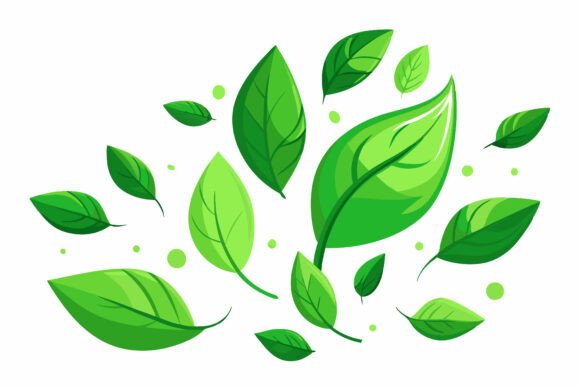
Green Leaves: Hello Welcome to our Special AI EPS Collections
When you think about the kinds of design assets that quietly hold a project together, a set of Green Leaves vector illustrations might just be at the top of the list. It sounds simple, but in practice, having a well-organized, expertly crafted collection of leaf graphics at your fingertips changes the way you work across print, web, and digital product design. This isn’t a random assortment of clip art. It’s a carefully structured AI EPS illustration set built for real creative scenarios, with each file thoughtfully layered and dressed in a level of detail that holds up under a client’s zoomed-in scrutiny.
From Branding to Social Posts: Where Green Leaves Fit In
Walk through a typical week for a graphic designer, and you’ll see how often a nature-inspired element becomes the missing piece. Maybe a local organic tea shop needs a logo refresh, and they want something earthy but modern. A few smartly modified leaves from this collection can anchor the brand mark, then cascade into business card accents, menu dividers, and social media banners without ever feeling repetitive. Because the files are designed for both Mac and Windows users, no one on a collaborative team gets left out, and the AI EPS and JPG format trio means you can drop a high-res preview into a mockup just as quickly as you can open the original vector and start reshaping.
A social media manager planning a month of wellness content might not think of themselves as a “designer.” Yet with these files, they can import the JPGs into Canva or another browser-based tool for quick posts, or hand the AI file to a colleague who can tweak stroke weight, recolor, and remove unnecessary details for a custom icon set. The smooth workflow is built right into the neatly organized file and layer structure, so even someone who isn’t an Illustrator expert can follow the naming, hide a group they don’t need, and export without breaking a sweat.
Turning One Collection into Dozens of Unique Assets
The real magic of this Green Leaves set is how far you can push a single illustration when everything is editable. Say you’re creating an infographic for an environmental nonprofit. You pull in a handful of leaf shapes, but instead of using them as-is, you change colors to match the organization’s palette — swapping the lush greens for sandy beiges, ocean blues, or even a gradient that tells a story about climate change. You might stretch a palm leaf into a subtle background pattern, turn a fern into a timeline connector, or composite several stems into a wreath for a fundraising badge. The perfection in details and consistency means that no matter how you scale or combine them, the line quality, corner radius, and proportion stay visually tight.
App UI designers often face the challenge of finding icons that feel organic without being childish. A set of Green Leaves can be transformed into navigation icons, filter categories, or even loading animations. Because the source files are vector-based, you can reduce a complex leaf to its simplest silhouette for a tiny favicon, or blow it up for a full-screen onboarding illustration without a single pixel getting soft. Suitable for print, web, symbols, apps, infographics—the words from the product description aren’t just a checklist; they’re a daily reality when you’ve got raw, editable shapes that respect material design grids and CMYK print requirements equally.
Fitting Right into Professional Workflows
One under-discussed frustration with stock illustration sets is that you’ll open an EPS file only to find a single flattened layer named “Layer 1.” That’s where this collection diverges sharply. The neatly organized file, and layer structure isn’t a throwaway phrase. Every leaf, stem, and vein sits on a labeled layer, often grouped with logical siblings. Need just the outline of a monstera leaf for a die-cut sticker? Expand the group, grab the stroke, and delete the fill. Want to animate the veins of a leaf in an SVG for a horticulture site? You can isolate those paths in seconds. For production artists who handle packaging dielines, the ability to quickly separate elements by layer means they can prepare spot-color versions for offset printing without starting from scratch.
Photographers and videographers who occasionally build title slides or thumbnail graphics will appreciate the included JPG files. While the AI and EPS formats give you infinite scalability, sometimes you just need a high-resolution raster version to place into a Premiere Pro timeline or a blog post. Since these JPGs mirror the same precise composition as the vectors, you get a consistent look across mediums without any extra export step. And for teams working across operating systems, the fact that everything is designed for Mac and Windows users removes the usual font-substitution warnings or corrupted preview images that can plague cross-platform asset sharing.
Adjusting Colors and Shapes to Match Your Vision Exactly
Possibly the single most practical superpower of these illustrations is how effortlessly you can change colors and modify the icon so easily according to your needs. In branding, color is identity. A health coach who uses dusty rose and sage green in their website won’t want a neon lime leaf. A children’s book illustrator might need leaves in unrealistic, playful purples and golds. Instead of spending an hour masking and recoloring in Photoshop, you simply select a group, pick a new fill, and watch the design instantly harmonize with the surrounding layout. You can even create seasonal variations: deep orange and burgundy leaves for autumn marketing, fresh yellow-green shoots for spring.
Beyond color, the shapes themselves can be pushed. Maybe a greeting card designer needs a more geometric, abstract leaf for a modern wedding suite. With the anchor points fully editable, they can drag corners, adjust bezier curves, and slim down a palm branch until it feels architectural. Later, that same modified leaf can be saved as a symbol and reused across envelope liners, RSVP cards, and thank-you notes, all from one altered asset. That kind of flexibility is why designers continue to reach for AI and EPS formats over static PNG collections.
Real-World Moments Where Green Leaves Become the Solution
Think about a small business owner who runs an eco-friendly cleaning product line. They’re not a full-time designer, but they’ve learned the basics of Adobe Illustrator to keep branding costs manageable. With this collection, they can open the AI file, select a few leaves that match the eucalyptus and mint scents they sell, apply their brand green (#4A7C59), and place them onto product labels, website headers, and thank-you inserts. The perfection in details and consistency means the label won’t look homemade — it’ll have the polish of a professionally illustrated brand, at a tiny fraction of the cost.
Or consider a middle-school science teacher crafting a digital worksheet on photosynthesis. They need clear, accurate leaf diagrams that look appealing to students. The JPG versions drop straight into a Google Slides presentation, while an advanced version using the AI file lets the teacher add numbered callouts pointing to stomata and chloroplasts. The layered structure makes it easy to create a simplified coloring-page variant by hiding complex inner veins, proving that the same pack can serve both high-end commercial design and humble classroom needs.
Event planners, too, find unexpected value. For a botanical-themed wedding, the Green Leaves set can become table number frames, menu accents, and even stencil overlays for dance floor lighting. Because the files are suitable for print, a 40-inch-wide banner printed at 150 DPI will still show crisp edges when using the EPS format. And when the client decides he wants all the greenery in gold foil rather than green, it’s a two-minute global color update rather than a complete redesign.
Layering, Grouping, and the Beauty of a Clean File
If you’ve ever inherited a messy design file, you know the pain of hunting for that one small element. The neatly organized, file, and layer structure here practically eliminates guesswork. Leaves are grouped by type — say, tropical, broadleaf, fern — and within each group, individual components like shadows, highlights, and core shapes are named consistently. This isn’t just nice to have; it speeds up adjustment, allows you to quickly toggle visibility for different comps, and makes it far easier to write clear instructions to a junior designer or a production house.
For those designing app icons, every path is closed and clean, which prevents those strange tiny artifacts that can appear when exporting SVG for code. An icon designer can select a single leaf, run “export for screens,” and generate twenty different sizes for iOS, Android, and web — all from the same pristine source. The perfection in details isn’t just about the final look; it’s about the underlying craftsmanship that prevents technical headaches down the line.
What Happens When You Mix Different Creative Fields
The versatility of the Green Leaves collection becomes most obvious when you notice how it flows between disciplines. A motion graphics artist working on a commercial for a botanical skincare brand can import the AI file directly into After Effects, convert the leaves to shape layers, and animate them swaying gently. The editable nature means they can separate the stem from the leaf blade for independent rotation, creating a more natural movement. Later, the same illustrator might pull stills for the product’s e-commerce page, where the JPGs already sit ready at print resolution.
Textile designers can tile and repeat motifs, adjusting scale and color for fabric swatches. A web developer building a restaurant site can use the leaf icons as SVG sprites, keeping page weight light while maintaining sharpness on retina screens. The cross-format availability — AI EPS and JPG — acts as a bridge, meaning that a concept that starts in a sketch can travel through brand strategy, digital marketing, physical merchandise, and even interior signage without ever leaving this single asset family.
What makes all of this work so smoothly is the thoughtfulness behind the source files. It’s not just that you can edit it, but how pleasant the editing experience is. You’re not fighting clipping masks that mask nothing, or compound paths that explode unexpectedly when you ungroup them. Each leaf feels like it was drawn by someone who also uses graphics daily — they’ve anticipated the kinds of manipulations a real designer performs and built the file to welcome those changes rather than resist them.
Keeping Pace with Todays Demanding Projects
Today’s content cycles move fast. A marketer might need a set of custom eco-icons for a new campaign that launches in three days. A product photographer might want to overlay a gentle botanical illustration onto a flat lay. A packaging team might be waiting on a dieline-ready graphic to send to the printer by end of day. In every one of these timelines, the ability to open a well-structured file, quickly change colors, and know that the output will look impeccable on both screen and paper is not merely a luxury — it’s the difference between meeting a deadline with confidence or scrambling. The Green Leaves collection fits into that reality and rewards the user who needs both speed and quality.
And while the collection is polished enough for luxury branding, it doesn’t feel stiff or lifeless. The shapes have a slight organic irregularity that keeps them from looking machine-plotted. That balance between clean vector precision and a hand-drawn sensibility makes them suitable for everything from spa menus to tech startup landing pages where nature plays a metaphorical role. That’s the kind of range that’s hard to find in a single download, and it explains why so many users keep coming back to this specific set when they need botanical imagery that doesn’t scream “stock.”
You won’t find yourself limited by the number of leaves, either. A typical set might include dozens of variations, each with its own character. One might be perfect for a minimalist tech logo, another for an elaborate tea tin illustration. Because the layer structure allows you to decompose a complex leaf into its basic parts, you’re actually working with a far larger modular system than a simple item count would suggest. A single fern can become a pattern, a background element, a silhouette, or a detailed focal point — all from the same root file.
Ultimately, what makes this Green Leaves collection special is not any single feature but the way all of them work together to get out of your way and let you create. When you don’t have to think about file compatibility, platform gaps, or messy layers, you can spend your energy on the part that matters: making something that connects with people. And that’s exactly the kind of tool every creative deserves to have in their back pocket.