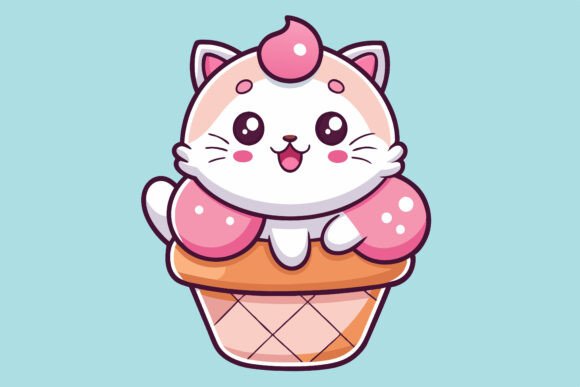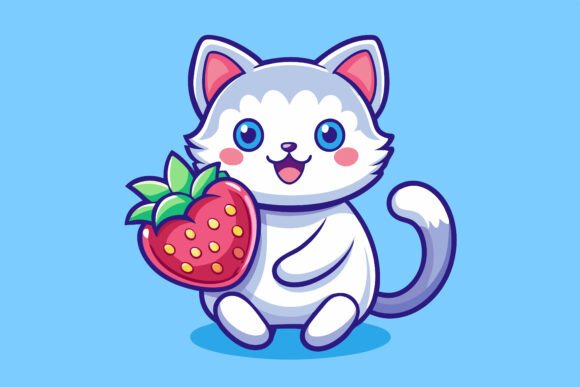
The Enduring Charm of the Cartoon Cat Holding Strawberry Fruit in Vector Art
Few images evoke instant warmth and playful nostalgia like a cartoon cat holding strawberry fruit. It’s a motif that transcends age, culture, and design trends—adorable, whimsical, and slightly indulgent. In a world saturated with sleek minimalism, this kind of character art offers a refreshing dose of personality. But beyond cuteness lies a powerful, flexible design asset. When that same illustration arrives as part of a meticulously organized AI EPS collections, it transforms from a simple doodle into a versatile toolkit for countless creative projects.
Understanding why such a specific theme resonates so deeply—and how the technical delivery of vector artwork makes it indispensable—can help professionals, hobbyists, educators, and business owners make informed decisions about the digital resources they incorporate into their work.
The Artistic and Symbolic Appeal of an Adorable Feline Motif
Cats and strawberries individually carry rich visual histories. Cats have long been symbols of curiosity, independence, and comfort. Strawberries, with their vibrant red hue and delicate seeds, represent summer, sweetness, and abundance. When combined into a single cartoon cat holding strawberry fruit, the result is an image that speaks to simple joys. It’s not just cute—it’s communicative. The wide-eyed expression of the cat, the plumpness of the berry, and the stylized paws all suggest innocence and delight without needing a single word.
For brands targeting families, bakeries, children’s products, or even wellness circles that celebrate natural foods, this motif carries immediate symbolic weight. It’s approachable and memorable. A strawberry-themed cat can soften a clinical interface, make a recipe card feel inviting, or turn a mundane product label into something people instinctively smile at. The visual storytelling is both subtle and powerful.
Moreover, the theme lends itself to endless variation. One might find a fluffy tabby clutching a giant strawberry with a delighted grin, or a sleek silhouette of a cat curled protectively around the fruit. In the context of a premium AI EPS and JPG illustration set, the creator likely started with a core charming concept and refined it to perfection, ensuring every whisker and seed aligns with professional standards.
Why Vector Format Transforms a Simple Illustration
Many people encounter cute artwork online as flat JPEGs or pixelated PNGs. These fixed-resolution images are fine for quick social media posts, but they fail miserably when you need to resize, recolor, or repurpose the graphic. This is where understanding the difference between raster and vector becomes critical. An AI (Adobe Illustrator) or EPS (Encapsulated PostScript) file is built from mathematically defined paths, curves, and shapes. That means the same cartoon cat holding strawberry fruit can appear crisp on a tiny app icon, a massive billboard, or a delicate wedding invitation without any loss of quality.
From a practical standpoint, this scalability saves time and money. You don’t need to commission or purchase multiple versions of the same character. The vector master file acts as the definitive source. And because the collection is designed for Mac and Windows users, it doesn’t matter which operating system you prefer; the files open seamlessly in industry-standard software like Illustrator, CorelDRAW, Affinity Designer, or even free alternatives like Inkscape.
Delving into the Composition: What You Actually Receive
When a collection is described with the phrase “Hello Welcome to our Special AI EPS Collections”, it often signals more than a single file dump. Based on the specific feature rundown that accompanies many professional vector sets, let’s examine the tangible components that set quality resources apart:
- AI EPS and JPG files included. You get the editable source files in both proprietary and open vector formats, plus a ready-to-use preview JPG. The JPG is helpful for quick placement, client mockups, or when you need a lightweight reference without opening editing software.
- Neatly organized file and layer structure. In the AI and EPS versions, elements like the cat’s body, the strawberry, the background (if any), shadows, and highlights are kept on separate, clearly named layers. This is not just a convenience—it's a necessity. You can isolate the strawberry to use alone, remove the cat’s facial features to create a blank template, or export individual parts as separate assets, all without hunting through thousands of ungrouped objects.
- Perfection in details and consistency. The nuance here matters. A well-crafted vector of a cartoon cat holding strawberry fruit will have smooth, intentional curves, consistent stroke widths, harmonious color palettes, and no stray anchor points. This level of polish means the artwork holds up under scrutiny, whether you’re zooming in for a print inspection or embedding it into an app interface where pixel-perfect edges are non-negotiable.
- Suitability for print, web, symbols, apps, and infographics. This versatility is the hallmark of a well-conceived character illustration. Because it's vector, you can export it for any medium. Use the same cat on a glossy product hangtag, a mobile onboarding screen, a small map symbol for a strawberry farm, or an infographic about healthy snacks. Consistency across touchpoints builds a stronger visual identity.
The Editing Advantage: Making It Uniquely Yours
One of the most underrated benefits of receiving artwork in an AI EPS format is the editing freedom it offers. The description emphasizes, “You can edit it, change colors and modify the icon so easily according to your needs.” This is not an exaggeration when the file is properly structured.
Consider a real scenario: a small bakery wants to use the cartoon cat on its packaging, but the cat’s current shade of ginger fur clashes with the established brand palette of mint green and peach. With the layered vector file, changing the fur color takes seconds. You select the fur layer, apply the exact brand color, and the illustration instantly aligns with the existing look. Similarly, if the strawberry is red but the client’s signature flavor is blueberry, you could swap the colors entirely, or even replace the strawberry with a different fruit using the same base shape and adapting highlights—a modification that would be absurdly difficult with a flat image.
For app developers, the ability to extract and modify elements is invaluable. You might take only the strawberry leaf as a tiny rating icon, or use the cat’s expressive eyes for a custom emoji within your chat interface. The artistic integrity remains, but the functional possibilities multiply. This flexibility also makes the asset future-proof. If your brand undergoes a refresh in three years, you won’t need to discard the illustration; you’ll simply adjust it to match the new guidelines.
Who Really Benefits from Such a Collection
While a whimsical cartoon cat holding strawberry fruit might seem niche, its user base is surprisingly broad. Let’s walk through diverse groups and how their workflows improve:
Small Business Owners and Solopreneurs
For a maker of handmade strawberry jams, a cat-themed logo or label instantly conveys the homemade, charming quality that sets small brands apart from corporate giants. They don’t need to hire an illustrator from scratch. The vector set provides a nearly finished solution. By tweaking colors and adding the company name, a DIY branding kit emerges at a fraction of the traditional cost and time.
Educators and Content Creators
Teachers creating themed worksheets, YouTube creators designing thumbnails, or bloggers writing about pet care and nutrition all benefit from high-quality, friendly graphics. The consistent art style of a single, polished character unifies their materials. Because the file works on both Mac and Windows, there’s no barrier to entry regardless of the school’s or individual’s hardware.
Print and Merchandise Designers
Vector files are non-negotiable for physical products. When screen printing T-shirts, engraving acrylic charms, or producing die-cut stickers, printers require vector outlines. A neatly organized EPS with well-separated layers allows the designer to quickly prepare cut lines and spot color separations. The perfection in details ensures that even at sticker size, the cat’s delicate whiskers won’t merge together into an unrecognizable blob.
UI/UX Designers and App Developers
Gamification elements, empty state illustrations, and onboarding characters benefit from a consistent guide. A friendly feline holding a reward-like fruit can become the visual anchor for a health app’s achievement system. The ability to scale the vector to any screen density (1x, 2x, 3x) without quality loss is a technical requirement, not just a luxury.
Observing Real-World Applications and Creative Inspirations
Let’s explore how the nuance of this specific illustration type plays out in actual projects. Imagine a restaurant menu. A sleek, modern café might use a highly refined, geometric version of the cat and strawberry as a section divider or a cute bundling icon for “berry desserts.” Meanwhile, a children’s hospital ward might blow up the same character into a vibrant wall mural. Both applications use the exact same base vector art, yet the context drastically alters the perception. The menu seeks to charm; the hospital seeks to comfort.
Another example: an eco-friendly brand selling strawberry-scented natural cleaning products. Their packaging might feature a simplified outline of the cartoon cat holding strawberry fruit to signal “safe for homes with pets.” The subtle communication bypasses lengthy explanations. The art becomes a shortcut to trust and relatability.
Infographics also thrive on character illustrations. A step-by-step guide on planting strawberries could feature the cat as a recurring helper: here it’s holding a seed packet, there it’s watering a sprout, finally celebrating with a ripe fruit. Unifying a sequence with a consistent character makes dense information digestible and playful. The original set, with its organized layers, lets the designer isolate the cat and reposition it repeatedly while maintaining exact visual consistency—something impossible to achieve with stock photos or disparate clipart.
Technical Considerations for Flawless Implementation
Even the most beautiful vector artwork can cause headaches if not handled correctly. When working with an AI EPS collection, a few practices go a long way.
Software Compatibility and File Opening
Both Mac and Windows users can run into minor issues if they attempt to open a modern AI file in very old software. The included EPS serves as a universal fallback. For non-Adobe users, importing the EPS into Affinity Designer or Inkscape typically preserves layers and editability if the file was built cleanly. It’s worth testing on your preferred software immediately to understand how the layers translate. The assurance that the files are designed for Mac and Windows users means the creator likely avoided proprietary features that break in cross-platform sharing.
Respecting and Leveraging the Layer Structure
A common mistake is to ungroup everything and start editing flat. Instead, study the layer names. A good structure might include: “Cat Body,” “Strawberry,” “Facial Details,” “Highlights,” “Background.” By toggling visibility, you can output multiple variations—a full-color cat, a silhouette, a strawberry-only icon—without altering the core file. Save a master copy untouched, then duplicate it for each project modification.
Color Customization Without Losing Harmony
When you “change colors and modify the icon so easily,” there’s an art to maintaining the original appeal. The perfection in details often lies in subtle gradients or multiple shades of a single hue that give depth. Recolor selectively. If you shift the cat’s fur from orange to gray, ensure the shadow and highlight tones adjust proportionally. Global color swatches, if set up by the illustrator, make this a one-click operation. If not, using the “Recolor Artwork” function in Illustrator can intelligently shift an entire palette while preserving relative lightness and saturation.
Why This Goes Beyond a Simple Digital Asset
We tend to view stock graphics through a purely utilitarian lens—something to fill a space. But a character like a cartoon cat holding strawberry fruit, when delivered in a thoughtful, editable format, becomes a creative partner. It invites customization and sparks spin-off ideas. The mention of “our Special AI EPS Collections” hints at curation and care. It’s a reminder that not all clipart is equal. The gulf between a hastily traced sketch and a meticulously constructed vector illustration is vast, and it directly impacts how your final project is perceived by an audience.
The collection described—with its dual file types, cross-platform design, organized layers, and broad use-case suitability—reflects a mature understanding of what modern creators need. It eliminates the repetitive technical wrangling so you can focus on the emotional and narrative potential of the art itself.
In practice, that might mean a nonprofit animal shelter uses the strawberry cat as their adoption event mascot, a Webtoon artist incorporates a recolored version into a comic panel, or a tech startup uses the friendly face to humanize a chatbot. The throughline is the same: an endearing, high-quality visual that does the heavy lifting of engagement while maintaining professional integrity.
The possibilities unfurl from the moment you open the file and see not just one image, but a neatly built system of shapes ready to adapt. And whether you’re a Mac aficionado or a Windows stalwart, the promise of seamless integration holds true. In a creative world increasingly driven by content velocity, having a versatile, perfectly detailed, and instantly likable asset is not just helpful—it’s genuinely strategic.